






Infosys SAP Services Showcases Syngenta’s Global SAP S/4HANA Transformation Journey at SAP Sapphire Madrid
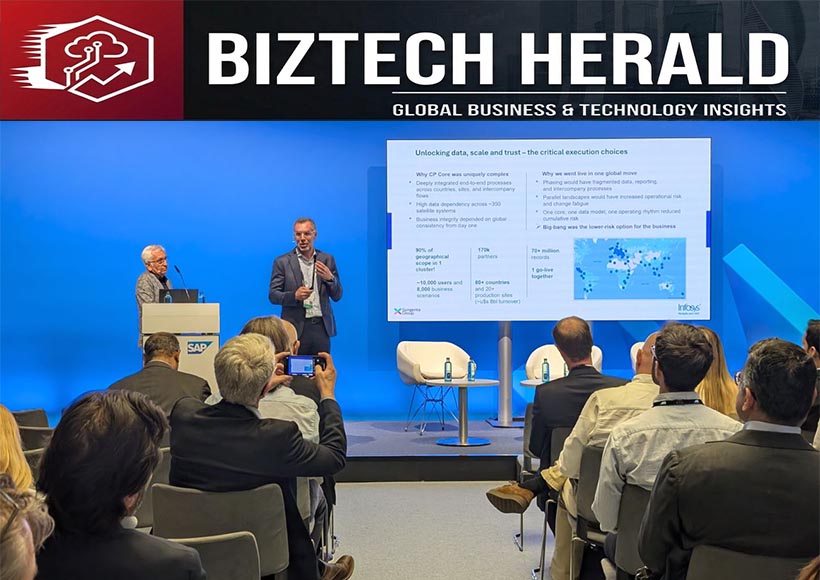
A major enterprise transformation success story took the spotlight at SAP Sapphire Madrid as Infosys SAP Services highlighted how global agricultural technology company Syngenta successfully modernized its operational landscape through a large-scale SAP S/4HANA transformation initiative spanning more than 80 countries.
The session featured Jorge Ricardo Lopez from Syngenta alongside Nasos Christakos from Infosys Consulting, who shared key insights into the organization’s transition from a highly complex legacy environment to a streamlined and scalable clean core SAP S/4HANA ecosystem.
As enterprises worldwide continue accelerating digital transformation initiatives, large-scale ERP modernization projects are becoming increasingly critical for organizations aiming to improve efficiency, enhance user experience, and build future-ready operating models. The Syngenta case emerged as a notable example of how transformation efforts can extend far beyond technology deployment and evolve into broader business reinvention strategies.
During the discussion, the speakers emphasized that the initiative was approached as a business transformation program rather than a conventional IT migration project. This distinction, according to industry experts, often determines the long-term success of enterprise transformation journeys.
Instead of limiting the scope to replacing systems or upgrading technology infrastructure, the implementation strategy focused on aligning business objectives with operational processes and organizational change initiatives.
The transformation framework was built around four foundational principles that guided execution across the global deployment:
Business-first approach:
The program was designed as a strategic business initiative focused on creating measurable value rather than simply implementing new technology.
Scalable architecture with disciplined execution:
The deployment model emphasized designing systems capable of supporting global expansion while maintaining operational consistency and execution quality.
Unified collaboration model:
The initiative relied on a single-team philosophy that encouraged seamless coordination among stakeholders, consultants, and business users rather than functioning through disconnected teams.
Technology as a behavioral enabler:
The project team highlighted that technology should not merely automate processes but also drive improved ways of working and encourage organizational transformation.
The implementation reportedly delivered strong results, including a smooth go-live process with no significant operational disruptions during deployment. Another major indicator of success was an end-user satisfaction score of approximately 80 percent, reflecting strong user adoption and positive employee experience following implementation.
The case study also reinforced a growing trend across industries where businesses are increasingly prioritizing clean-core ERP strategies. Such approaches aim to reduce system complexity, improve flexibility, and create an environment where future innovation can be implemented more efficiently.
SAP Sapphire Madrid served as an important platform for enterprise leaders to discuss emerging trends around cloud transformation, intelligent automation, and business process modernization. Sessions such as Syngenta’s transformation story continue to provide valuable practical insights for organizations planning their own digital transformation roadmaps.
The event concluded with appreciation for the speakers and participants who contributed to an insightful discussion centered on sustainable enterprise transformation and the future of intelligent business operations.